




Building an Instagram Content Plan for Sustainable Growth

Growing on Instagram can look easy from the outside. Someone posts a Reel, it suddenly gets thousands of views, followers start coming in, and it looks like the account has cracked the code.
In reality, sustainable growth usually works differently.
One viral post can bring attention, but a proper content plan gives people a reason to stay. It helps an account remain consistent, understand its audience, test ideas, and gradually build a recognizable presence.
Instagram is still a huge platform. DataReportal reported that Instagram’s advertising tools showed a potential reach of 1.74 billion users globally in January 2025. Its India data later reported an estimated 481 million Instagram users in late 2025 based on Meta’s advertising tools. These figures are advertising audience estimates, not a direct count of unique active users, but they show how large the potential audience can be. For people researching how to buy followers on IG, these audience figures also highlight the scale of competition and visibility on the platform.
With that much competition, randomly posting whenever you remember is not much of a strategy.
Start With One Clear Goal
Before planning 30 posts, decide what you actually want Instagram to do for you.
Your goal might be:
- Building brand awareness
- Getting more profile visits
- Generating leads
- Selling products
- Building a personal brand
- Growing a community
- Bringing traffic to another platform
- Establishing expertise in a niche
These goals can overlap, but one should lead the strategy.
For example, a local salon might want appointment inquiries. A travel creator might care more about building a loyal audience. An online store might focus on product discovery and sales.
The content should support the actual goal.
Know Who You Are Talking To
A content plan becomes much easier when you know who you are creating for.
Do not settle for something vague like “people interested in fitness.”
Get more specific.
Maybe your audience is:
- Busy office workers
- Beginners who dislike gyms
- Parents looking for quick workouts
- Students trying to eat affordably
- People interested in home exercise
Each group has different problems.
A busy office worker might respond to a “15 minute workout after work.” A beginner might prefer “3 gym mistakes to avoid.”
The subject is fitness, but the angle changes.
Build a Few Content Pillars
You do not need a new idea every morning.
Create three to five content pillars that you can return to regularly.
For example, a small fashion account could use:
Styling: Outfit combinations and practical fashion ideas.
Education: Fabric, sizing, care, and shopping tips.
Community: Customer photographs, questions, polls, and opinions.
Behind the scenes: Packaging, sourcing, and daily business moments.
Products: New arrivals and selected promotions.
This gives the account structure without making every post look identical.
Use Different Formats for Different Jobs
One mistake is expecting every format to do the same thing.
Reels can be useful for discovery and reaching people who do not already follow you.
Carousels can work well for step by step information.
Stories can support regular interaction with existing followers.
Live sessions can create direct conversations.
A simple weekly plan might look like this:
- Monday: Educational Reel
- Tuesday: Story poll
- Wednesday: Carousel
- Thursday: Behind the scenes Story
- Friday: Short entertaining Reel
- Saturday: Community or customer content
- Sunday: Useful tip or weekly recap
This is only an example. Your analytics should eventually determine what deserves more attention.
Do Not Chase Every Trend
Trends can be useful, but jumping onto every trending sound or format can make an account feel confused.
Ask one simple question before joining a trend:
Does this make sense for my audience?
If the answer is no, skip it.
A finance account does not need to turn every financial topic into a dance trend. A professional service provider does not need to copy every meme.
The smartest trend is often the one you can adapt naturally to your subject.
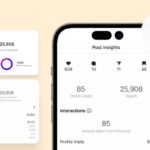
Study Your Own Numbers
You do not need to become a data scientist.
At the end of each month, compare your best and weakest content.
Look at:
- Reach
- Likes
- Comments
- Saves
- Shares
- Profile visits
- Follows
- Story views
- Link or action clicks where relevant
Then ask what changed.
Did short videos perform better?
Did practical tutorials generate more saves?
Did personal stories produce more comments?
Did a certain topic bring profile visits?
The answers should influence the next month’s plan.
A Real World Example
Imagine a small home decor account with 8,000 followers.
The owner posts beautiful room photographs, product images, and practical decorating tips.
After tracking a month of content, the owner notices:
Room photographs: High likes, moderate reach.
Decorating tips: Moderate likes, high saves.
Before and after videos: High reach and profile visits.
Instead of abandoning photographs, the owner can change the balance.
The next month might include more before and after videos and practical tips, while still using photographs to maintain the visual identity of the account.
That is sustainable planning.
The owner is not guessing anymore.
Quality Matters More Than a Big Follower Number
A large follower count can look impressive, but it does not automatically mean an account has a strong community.
Some people become interested in follower growth and may even search for services or phrases such as “buy 100000 instagram followers.” But a huge number on a profile does not guarantee that those followers are genuinely interested, active, or relevant to the account.
For long term growth, focus on people who actually watch, respond, save, share, visit your profile, ask questions, or become customers.
A smaller audience that consistently interacts can provide much more useful feedback than a large audience that remains silent.
Create a Content Bank
Waiting until Monday morning to decide what to post is a recipe for rushed content.
Keep a running list of ideas.
Your content bank can include:
Questions: Things followers frequently ask.
Problems: Issues your audience struggles with.
Opinions: Topics where you have a useful perspective.
Tutorials: Things you can explain step by step.
Examples: Real situations from your experience.
FAQs: Questions that appear repeatedly.
Experiments: New formats you want to test.
Whenever you get an idea, write it down.
After a few weeks, you may have dozens of potential posts ready to develop.
Use the 70 Percent Rule Carefully
There is no universal percentage that guarantees Instagram growth, but a practical planning approach is to keep most content aligned with your core subject while leaving some room for experimentation.
For example:
70 percent: Proven topics and formats.
20 percent: Related subjects.
10 percent: Experiments.
These numbers do not need to be exact.
The idea is simple: do not rebuild your entire account every time something new appears.
Keep what works, explore what might work, and occasionally take a calculated risk.
Leave Room for Real Life
A content calendar should help you, not trap you.
If a major event happens in your industry, you may want to discuss it. If your audience suddenly starts asking about a particular issue, that may deserve a post.
Do not ignore useful conversations just because they were not written into your calendar three weeks ago.
A good content plan has structure but still leaves breathing room.
Think in Months, Not Days
Sustainable growth rarely comes from obsessing over yesterday’s numbers.
One bad post does not mean your strategy failed.
One viral post does not mean you have solved everything.
Look at longer patterns.
After 30 days, ask:
- Which topics repeatedly performed well?
- Which formats brought the most useful engagement?
- Which posts attracted new followers?
- Which posts generated conversations?
- What did people repeatedly ask for?
- What should be tested next?
Then build the next month around those lessons.
The Real Goal Is Momentum
Instagram growth becomes easier to manage when you stop treating every post like a lottery ticket.
You create something useful.
You observe the response.
You learn.
You improve the next piece.
Then you repeat the process.
That is the unglamorous part of sustainable growth, but it is also where most of the useful learning happens.
A content plan does not need to be complicated. It needs to be realistic enough that you can actually follow it.
Know your audience. Choose a few strong content pillars. Mix formats. Track meaningful numbers. Listen to comments and questions. Keep testing.
Most importantly, do not build your entire strategy around looking bigger.
Build it around becoming more useful.
When people repeatedly find something useful, entertaining, relatable, or worth sharing on your account, growth has a much stronger foundation to stand on.